
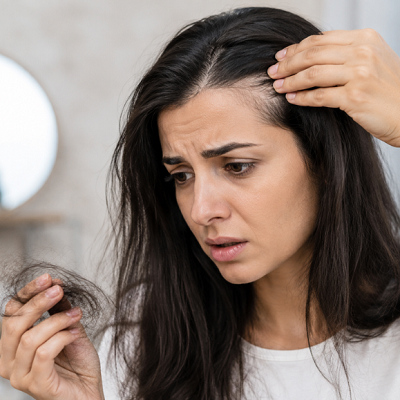
Noticing a rapid increase in hair loss after giving birth to the child? Wait a sec! Have you ever suspected that it was hormonal hair loss? If yes, then you are at the right place. We are here presenting you with a guide on “What Hormonal Changes Can Cause Female Hair Loss?” Take some time out from your busy schedule and book an appointment with one of our best experts so that thinning hair may not define you anymore.
What Hormonal Changes Can Cause Female Hair Loss?
Hair loss is a common issue these days. Usually, hair loss in women can be linked to the hormonal changes that lead to changes in the hair growth cycle. An increase in shedding or hair thinning may be observed due to various hormonal changes such as menopause, thyroid disorders, hormonal imbalances, or shifts in estrogen. If you are also concerned about the causes that lead to female hair loss, then here is an expert’s insight for better understanding.
Factors Contributing to Female Hair Loss:
The hormonal changes that might lead to an increase in hair loss are as follows:
Pregnancy & Postpartum Hormonal Changes
During pregnancy, most women experience an increase in estrogen levels, which keeps their hair in the active growth phase, making it appear fuller and thicker. After giving birth to the child, estrogen level falls that may lead to postpartum telogen effluvium. That’s why most of the women may notice an increase in hair shedding after a few months of childbirth,
Menopause and Declining Estrogen
During the phase of menopause and perimenopause, the levels of estrogen and progesterone decline. With the changes in hormonal levels, the hair growth cycle is affected, which often may lead to certain issues:
- Hair thinning
- Reduction in hair density
- Increased hair shedding.
Androgen Excess
Androgens that include testosterone and dihydrotestosterone (DHT) may have a great impact on the hair follicles. The excess androgen activity in the female body may often lead to the progressive miniaturization of scalp hair follicles. It is basically associated with different medical conditions like polycystic ovary syndrome (PCOS). Women may also notice different symptoms along with hair thinning, such as irregular menstrual cycles, an increase in facial hair, and acne.
Thyroid Hormone Imbalances
Most women suffer from thyroid issues due to hormonal imbalances. If you are struggling with hypothyroidism and hyperthyroidism, the hair growth cycle will be ultimately affected. In case of having an underactive thyroid, hair increasingly sheds and becomes dry and coarse. Whereas in case of an overactive thyroid, one might experience hair thinning.
Polycystic Ovary Syndrome (PCOS)
PCOS may often lead to an increase in the level of androgens, which might often lead to pattern hair loss in females. The hair around the crown may become thinner in case of having Polycystic Ovary Syndrome.
Hormonal Changes Associated With Stress
In some cases, severe stress may lead to a disturbed hair cycle. Hair shedding may become noticeable weeks to months after sometime of the stressful event.
Changes in Estrogen-to-Androgen Balance
Changes in hormones such as estrogen, progesterone, and testosterone may impact follicular activity. It usually happens in major hormonal transitions that include menopause,
Perimenopause and postpartum recovery ultimately impact hair growth.
Stopping Hormonal Contraception
Sometimes changing or discontinuing hormonal contraceptives can stimulate hair shedding for a certain time period, which stops after several months.
How to Identify Hormonal Hair Loss in Women?
Most of you must be thinking about how hormonal hair loss can be identified, as it may also occur due to some other reasons such as nutritional deficiencies or genetics. Here are some of the aspects that may aid you in identifying hair loss that occurs due to hormonal changes;
- Pregnancy
- Overall health
- Hair-loss pattern
- Menstrual history
- Extent of hair loss
- Postpartum Changes
- Menopausal symptoms
- Family history of hair loss
- Medications and supplements
- Symptoms related to Thyroid
In a nutshell, the fluctuation in hormones may lead to a significant change in hair growth. Sometimes it might trigger hair shedding, thinning of hair, reduction in hair density, and development of pattern hair loss. It is usually caused when the balance between the growth phase (anagen) and resting/shedding phases (telogen) of the hair cycle is disturbed.
Schedule the Consultation For Restoration of Voluminous Hair
Struggling with hair thinning or hair loss after childbirth? Then schedule the consultation session at SKN Cosmetics to undergo the Female hair loss treatment in Islamabad.
FAQ’s



Book your Appointment